
Why We Don’t Let Painters Start on Day One
Starting paint too early slows projects down. Learn how proper sequencing keeps DOCI renovations fast, clean, and done right the first time.
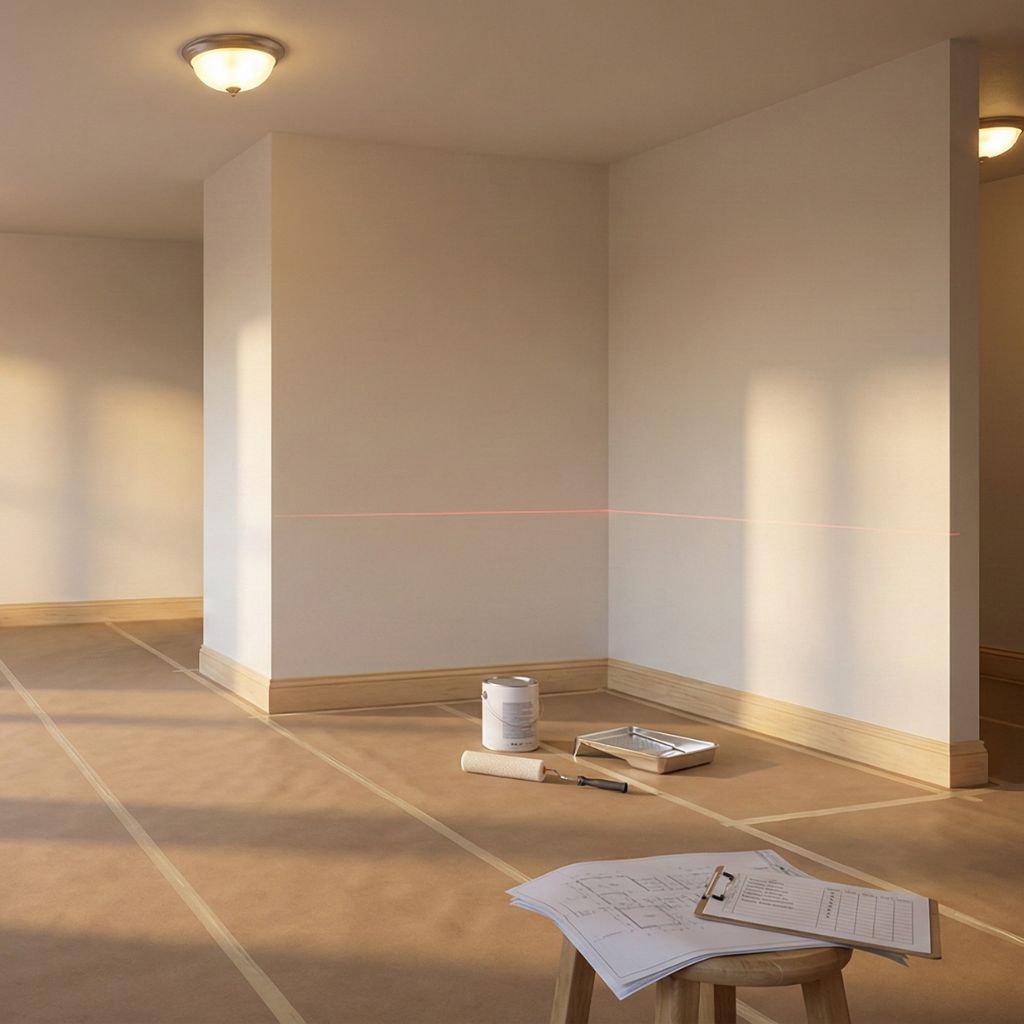
Most people think painting is the first step in a renovation. It feels quick, it looks productive, and it gives the illusion that things are ahead of schedule.
But here’s the truth: if your painters are starting early, your project is already at risk.
Just like cabinetry defines structure and flow in an open-concept kitchen, proper sequencing defines whether a renovation runs with clarity, or chaos. Painting is a finishing trade, and a finished trade only saves time when it happens at the right momen
Here’s why we never let painters begin before the space is truly ready, and how this single decision keeps DOCI projects clean, fast, and efficient.
Painting Is a Finishing Trade, Not a Starting Point
Paint only looks fast when it happens once. Repainting is slow, expensive, and disruptive.
Before a single drop of paint goes on a wall, we make sure everything underneath it is completely stable. That means:
- Wet work is cured, mud, texture, self-leveling compound, thin-set, tile work
- Moisture and temperature are controlled, HVAC must be running to keep humidity consistent
- Permanent lighting is installed, so colors appear true and finish quality can be inspected
- Dust control is set up, to prevent debris from settling into fresh coats
- Protection is installed, on doors, floors, cabinets, and fixtures
Without that foundation, paint becomes a temporary illusion. It looks complete until every other trade scratches, dents, or dust-covers those “finished” walls.
Our philosophy mirrors the design principles used in cabinetry layout, sequence first, finish second.
The Drywall Finish Level Matters More Than You Think
We never guess on drywall quality.
Before painters step in, we confirm:
- Drywall finish level achieved and approved
- Prime coat applied and inspected for flaws
- Caulking complete
- Patchwork done and smooth
This inspection phase works the same way cabinetry helps maintain clean flow in an open-concept layout; small irregularities become large visual distractions once final finishes go up.
Paint magnifies everything. If the drywall isn’t perfect, the paint won’t be either.
Why Other Trades Must Be Out of the Room
Painters are the last people you want working in a space full of electricians, plumbers, tile crews, or trim installers.
If other trades are still active:
- Fresh walls get gouged
- New trim gets scuffed
- Corners get bumped
- Dust keeps settling on drying surfaces
- Touch-ups multiply
When painters work too early, they’re forced to repaint. And repaint. And repaint.
It’s not just a workflow issue, it's a wasted cost.
The Right Painting Sequence Protects the Entire Renovation
Once the space is prepared and all other trades are out, we follow a defined sequence:
- Ceilings
- Walls
- Trim
- Touch-ups
- Final inspection
And then we protect everything as if the unit is about to hit the market.
Because it is.
This mirrors the systematic approach you’d use with cabinetry, placement, alignment, finish, inspection, protection.
Why Starting Paint Early Actually Slows Projects Down
On paper, early painting looks efficient. In reality, it triggers:
- Double the labor (every interruption becomes a touch-up)
- Longer timelines (finish trades must redo work)
- Uneven color appearance (lights installed later reveal imperfections)
- Visible patches (humidity shifts change sheen or texture)
- Higher costs at turnover (because the “early paint job” never survives)
Painting early is like installing cabinets before the walls are straight; it creates more problems than progress.
How Proper Sequencing Makes DOCI Projects Faster
When painting happens at the right moment, you get:
- Cleaner lines and smoother walls
- Zero rework
- True color accuracy with full lighting
- Protected finishes that survive turnover
- A clear runway for the final punch list
- A faster path to market-ready status
This is how we deliver units that feel intentional, cohesive, and genuinely finished, similar to the curated, connected feel well-designed cabinetry achieves in an open-concept home .
The DOCI Standard: We Don’t Waste Time Twice
Painting is one of the last steps for a reason.
A unit should be 95% complete before the first gallon is opened. Every day of sequencing we invest upfront saves days of repainting, patching, and correcting later.
Early painting feels fast.
Correct painting is fast.
That’s the difference.
If you want your renovations to run smoother, cleaner, and without repeat work, this is how it starts.
Let us create a space that exceeds your expectations
