
Why We Build With Margin, Not Just Schedules
Margin protects renovation timelines. Learn why buffers, cure times, and trade sequencing keep construction schedules realistic and on track.
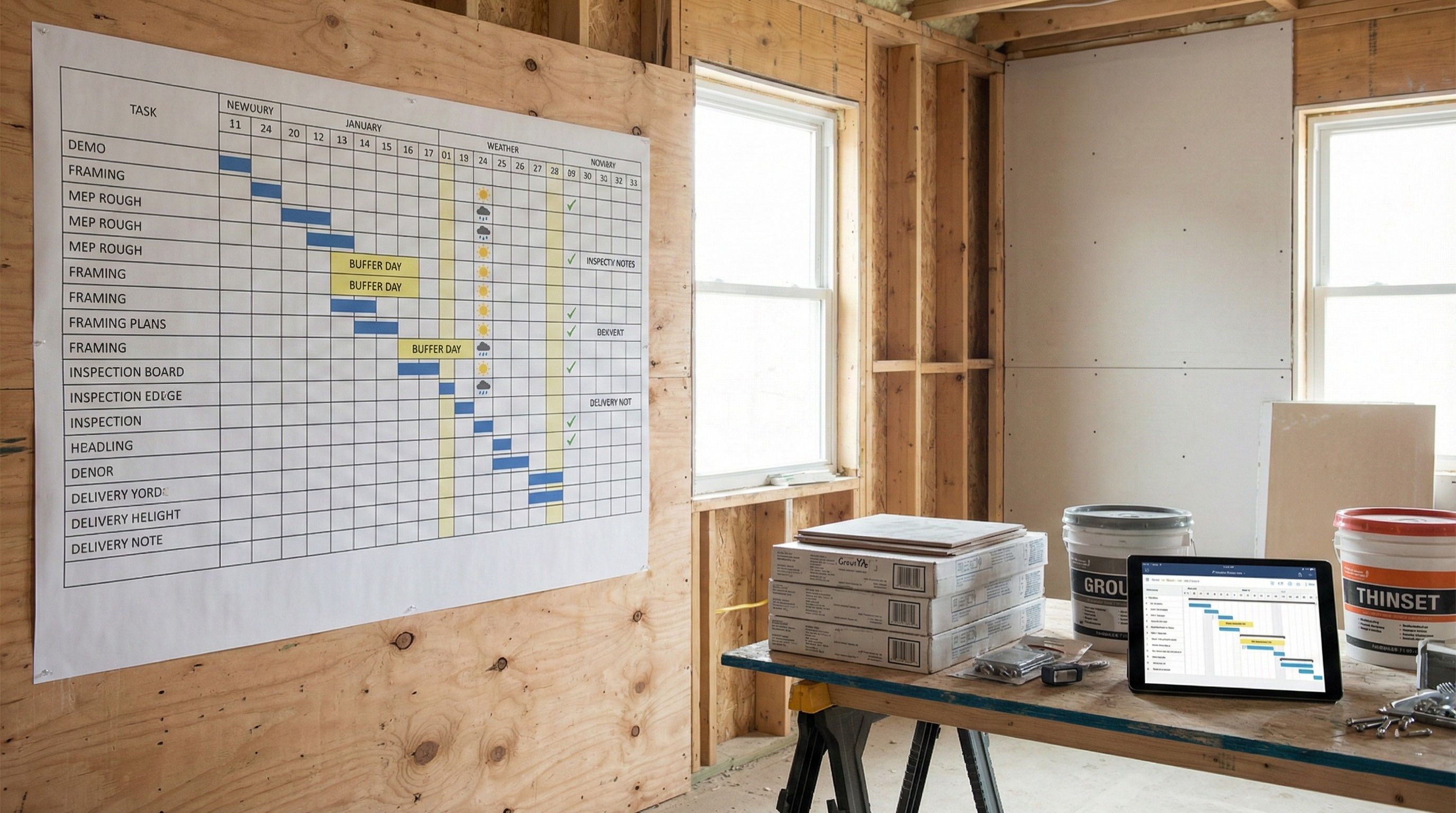
Construction schedules look clean on paper. Linear timelines, perfect overlaps, tidy sequencing, it all seems predictable until the job starts.
But here’s the truth:
Timelines without buffers are fairy tales.
Real projects face real-world friction.
Inspections slip. Delivery trucks show up late. Material shipments arrive missing a box. A day of rain throws the entire sequence off.
None of this is unusual.
All of it is predictable.
Which means buffer isn’t “extra”, it’s the only reason schedules survive contact with reality.
Margin is how you finish on time.
At DOCI, we don’t build schedules that assume perfection. We build schedules that assume problems and absorb them before they derail the week.
Why Margin Protects Your Timeline
Traditional schedules fail for one simple reason: they depend on everything going right.
But construction is a series of dependencies:
- one trade blocks another
- one failed inspection halts a critical path
- one late truck stalls three crews
Without margin, you’re gambling with your timeline.
With margin, you’re controlling it.
We Plan for Delays Because Delays Are Normal
Here’s what we anticipate on nearly every job:
- an inspection window shifting by a day
- a supplier short-shipping a box of tile
- a truck stuck behind weather
- a sub who gets pulled into an emergency elsewhere
None of this is catastrophic, unless your schedule assumes it won’t happen.
That’s why we build float into the system.
Building Float Into Critical Paths
A critical path is where delays hurt most.
We protect it by adding strategic breathing room.
Examples of built-in float:
- extra days on long-lead procurement
- secondary SKU options selected early
- inspection blocks instead of fixed hour slots
- cure-time padding for mud, paint, tile, and levelers
Float doesn’t slow the project, it stabilizes it.
Your project isn’t late because things went wrong.
It’s late because no one planned for things to go wrong.
Procurement With Safety Nets
Material delays sink more schedules than labor shortages.
So we avoid surprises by:
- padding supplier lead times
- pre-verifying inventory
- carrying backup SKUs with matching specs
- staging materials early whenever possible
Speed comes from readiness, not rushing.
Inspection Windows, Not Single Slots
A single missed inspection hour can cost you a whole day.
We don’t gamble with inspections.
We book windows, prepare early, and run pre-inspection checks so issues are caught before an inspector ever arrives.
Margin prevents rescheduling.
Preventing rescheduling protects the project.
Protecting Cure Times
Finishes must cure, not just dry.
Ignoring that rule creates future failures.
We protect cure times for:
- drywall mud
- texture
- self-leveling compound
- tile mortar
- grout
- paint
Cure times are not negotiable.
They’re the difference between a warranty claim and a clean handoff.
Separating Trades That Clash
Some trades can overlap.
Some should never be in the same room.
We separate:
- painters and flooring crews
- tile installers and plumbers
- mud work and anything dusty
We parallel the tasks that align and isolate the ones that sabotage each other.
Margin isn’t about slowing work down.
It’s about preventing collision.
Hold Points: How We Control Quality Without Losing Time
Hold points let us verify work before it’s covered, buried, or repeated.
Our key hold points include:
- layout check
- first-article install
- pre-cover photo documentation
- rough-in confirmations
- final substrate review
Hold points stop compounding mistakes.
A single wrong layout unchecked can cost days.
T-Minus Checklists Before Every Milestone
Before each milestone, we run a T-minus checklist:
- Is the room ready?
- Are materials staged?
- Are trades aligned?
- Are dependencies resolved?
- Are cure times met?
This is how we eliminate surprises, not by reacting, but by verifying.
Weather + Unknown Buffer: The Lifesaver
Even interior jobs feel the ripple of external conditions:
- delayed deliveries
- extended cure times
- limited access
- crew rerouting
We keep a small buffer for the unknown so a single lost day doesn’t tank the entire week.
You can’t control weather.
But you can control how much it disrupts you.
Margin Isn’t a Waste. Margin Is What Protects the Schedule.
Anyone can build a schedule. But most schedules assume a fantasy version of the job. Margin makes the schedule real. Margin absorbs the friction. Margin keeps the project stable.
In construction, the goal isn’t to avoid problems. The goal is to prevent problems from delaying the work. Margin is how we do that.
If your renovations constantly run behind, you’re not dealing with a labor issue, you’re dealing with a planning issue.
DOCI builds schedules that work in the real world, not only on paper.
And that difference is what protects your rent, your NOI, and your turnover deadlines.
Want renovation timelines that actually hold?
Connect with us here: https://docicompanies.com/contact/
Let us create a space that exceeds your expectations
